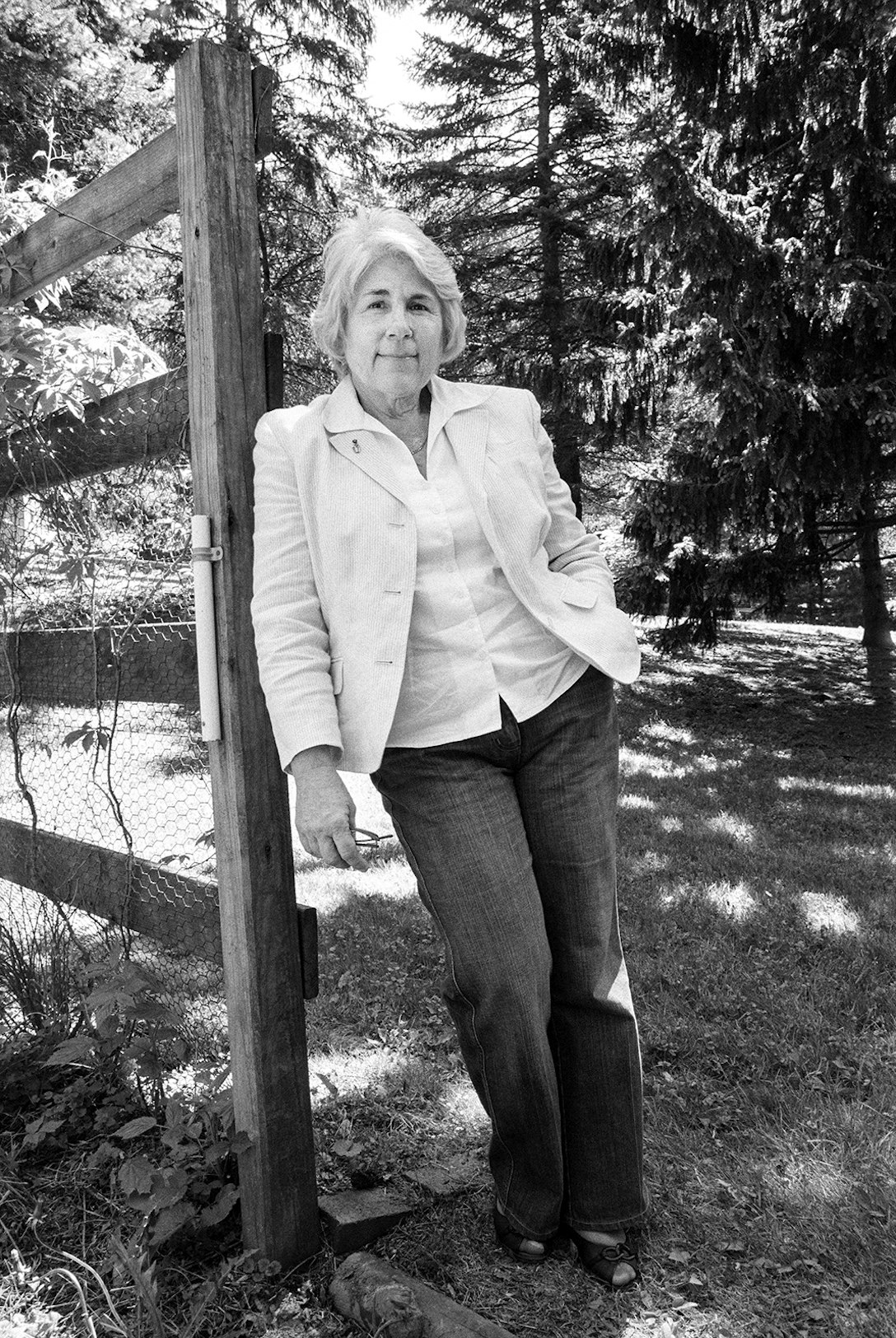
Margaret Krym
Cape Coral, Florida, USA
Christian Science and Healing
Most people, when they think about Christian Science, the first thing that comes to their mind is: “They don’t go to doctors.” So there’s the whole thought that those parents might be withholding care for their children.
Well, in my situation growing up as a child, if the need presented, my parents always took me to a doctor. When traveling to Japan, there were a whole array of shots that were required, and I remember having a million shots to go overseas on a military transport. So rather than fighting the system, my parents chose to acquiesce and to accept that no harm could come from that, either.
There are Christian Science parents who don’t choose to do that—and that, in the eyes of the public, is a difficult thing to understand. But in my case that was not the case. And even when my children were growing up, I took them to the medical community if there was a need. But on the other side of that, I have to say that I rarely had need. So, you know: what comes first: the chicken or the egg? Who knows?
Many faiths accept the fact that humans are spiritual, but we would say that that should be demonstrable. We should be able to use that information and that understanding to alter our experience, to have dominion. Many times I have seen things change. If we held onto the rigidity of matter being substantial and being the building blocks of creation, if we're held onto that kind of rigid thinking, these things would seem impossible. That’s really the essence of what we call healing in Christian Science—it is seeing the fluidness of matter; being open to the possibility of what some would call miracles; seeing the coincidence of God and man, joined together in life experience.
Matter becomes something more fluid, less substantial, more changeable as thought changes, as consciousness becomes more aligned with a holier thought. And that kind of transformation of matter gives man enhanced ability to have dominion over himself, over his world, over his reality. That, I think, is a point of demarcation that sets Christian Science in a different dimension.
Daniel’s Reflection
Margaret Krym is a dear friend of my dear friend, Rabbi Leah Cohen Tennenbaum. They met when Margaret was Leah’s boss at FHP Health Plans in Guam in the years before Leah became a rabbi. They became very close friends including being SCUBA diving buddies. Margaret was Leah’s birth coach when she had her daughter Eliana.
It was at Eliana’s bat mitzvah 12 years later that I got to meet Margaret. I was intrigued by her Christian Science upbringing and faith. I had heard that Christian Science practitioners do not go to doctors but I did not know if that was true. I knew very little else about the practice of that religion,and I certainly did not know the spiritual beliefs of Christian Scientists.
Christian Science was founded by Mary Baker Eddy in 1879 after she wrote its pivotal text, Science and Health with Key to the Scriptures (1875). Christian Scientists believe that God is not a personal being but is represented by seven ideas: Mind, Spirit, Soul, Principle, Life, Truth, and Love. They believe that the physical world is not real but illusory; only Spirit is real. And because matter and form are what is real then matter/form is subject to the laws of Spirit. Christian Scientists believe that spiritual healing,as taught by Christ Jesus,can be practiced by anyone today through prayer. They believe that people are not born sinners but are pure. Sin is considered to be anything that takes a person away from God.
With that information, I came to understand that Christian Scientists vary in their use of traditional medical healing versus spiritual healing. I learned from Margaret that her parents took her for vaccinations before their move to Japan and Guam when she was a child. And Margaret took her own kids to the doctor when necessary but she shared that it wasn’t often necessary. There was just a core belief of spirit over matter and that prayer affects healing. What I love about this philosophy is that Christian Scientists believe that the physical world is subject to the laws of the spiritual world. I can easily align to that and I know the power of prayer in my life and in the lives of many I’ve met around the world.
My greatest takeaway from interviewing Margaret is this idea that God is our constant companion. She shared this experience with me:
I had an experience once. I was struggling with something and I was on the boat. We were at anchor in a very remote place and I remember sitting on the bow of the boat where you have a sense like you're flying. All in front of you is water. And I think I’d had an argument with my husband. We were fighting about some trivial thing, no doubt. And I was sitting up there and I was frustrated at the moment because I couldn't feel that sort of Presence, and I remember saying, "Are you there?" And I just had this sort of flood of feeling of, "Of course I am you silly girl." It's almost like a parent would be saying, "Of course! What did you think? What did you expect?" And in that moment, it's like the temperature changed; the clarity of the air changed; the smell changed; the breeze felt different; the sky looked different; everything just felt and looked different. And I just had this sense of being companioned. It was just kind of a profound moment. And a sense that there was that kind of closeness if I ever turned to ask, and that the Presence was there. So wherever I could go, there would never be a place that it wouldn't be there; that companionship wouldn’t be there. It was a very precious moment for me. There's a passage [in the Bible] about ‘take off your shoes, where you stand is holy ground.’ And my thought about that is that when we turn thought to that kind of Presence, we are standing on holy ground; and that can be anywhere.
Thank you to Margaret Krym for sharing with me her faith journey in Christian Science,for reminding me that we are “companioned,” and that everywhere and anywhere can be holy ground.


Explore the portraits by theme
- happiness
- grief
- addiction
- sexuality
- sobriety
- transgender
- alcoholism
- suicide
- homelessness
- death
- aggression
- cancer
- health
- discipline
- abortion
- homosexuality
- recovery
- connection
- enlightenment
- indigenous
- depression
- meditation
- therapy
- anger
- forgiveness
- Doubt
- interfaith
- worship
- salvation
- healing
- luminaries