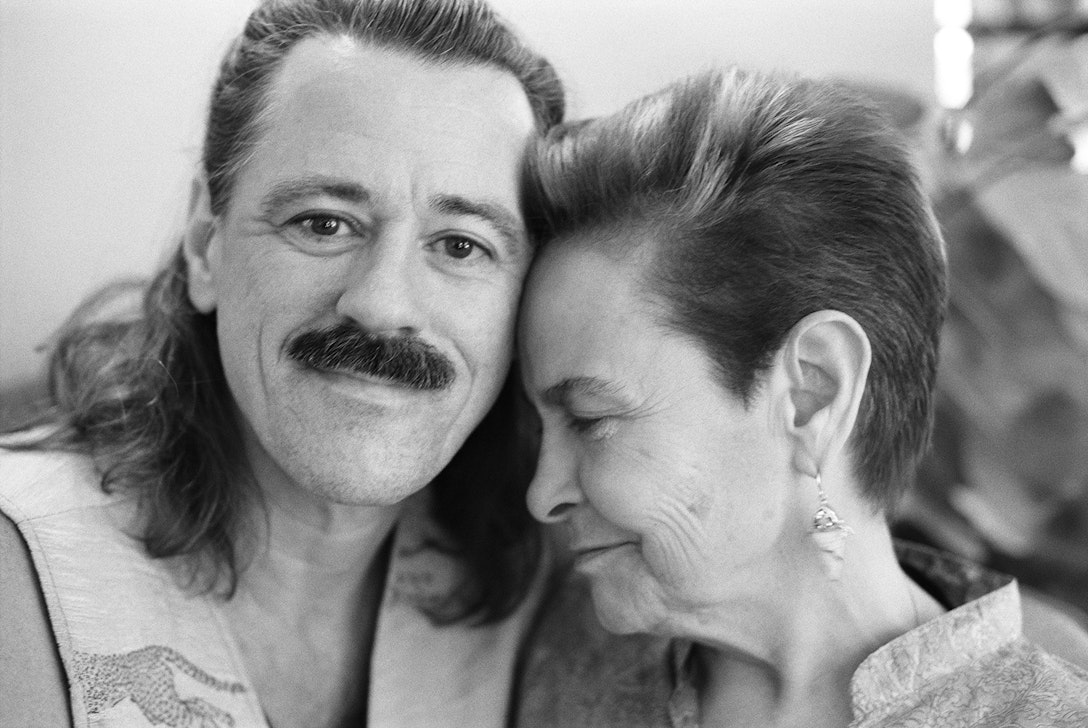
Mukara Meredith and Shano Kelley
Boulder, Colorado, USA
SPIRITUAL DEVELOPMENT IN COMMUNITIES
— Mukara —
When I was a child, I grew up as a Baptist. My mother was ill. She had periodic psychotic breaks and was hospitalized against her will. I must have been 12 or 13 when I was on a bus going to visit my cousin, and I was sitting in this big seat. Somebody was sitting next to me, and I had the thought, “I want to grow up and learn all I can so I can help my mother.” I made a prayer that I’d be able to do that, and it felt like my prayer was somehow received. I had the feeling there was such a depth of longing for that, that it would happen. I think that was probably the first time I had to reach for something larger.
As an adult, I became a Buddhist. But I doubted my faith when I knew that there was considerable dysfunction in my community here in Boulder. And I knew that in order to pursue real freedom, I would have to leave. It was the hardest thing I ever did, and I just wept, and wept, and wept…for a long time.
The way this dilemma was experienced in my being was that the teaching and the power were extraordinary, but the translation of that into a working community where each person’s gifts could be valued and there could be wholeness—it was just so lacking. It was very disempowering to the people who were in the community. I mean there wasn’t this energy there. The contrast between what was possible through the profundity of the teachings, and what was actual…I couldn’t fix it. I couldn’t make it work.
I don’t know that it made me doubt my faith in the tradition, but it made me want to look for answers for how to create healthy communities that were based on Buddhist teachings. And I do that as much as I can, as much as dharma groups will let me come and work with them and bring the group work. The lesson was about the integration of an understanding of what happens to people in groups and how the shadow must be integrated; that the higher the values and the aspirations, the more likely the unconscious shadow is to be able to pollute them, to make it difficult. So, how to stay awake was the challenge.
— Shano —
We were part of some of the first healing festivals that happened in the United States. And the whole concept of holding the healing festival on record was this man by the name of Dream Story. He had been doing it in Australia and brought the concept to America. We acquired a couple of hundred acres of land outside Safford, Arizona. It was called Indian Hot Springs, and it’s now a piece of property owned by Mick Jagger. For three years in a row, we held a healing festival there. The first year, it drew about 1,500 people from all over the United States. It was just a wonderful way to wake up to something fuller and deeper.
The festival was clothing optional; there were hot springs all over the land, and a big swimming pool. There was an old, three-story hotel that used to be where the mob hung out. I had a village of 30 or 40 teepees set up, and I was in charge of cooking for one week with three other people.
Out of that experience came an awareness of just pure open mind. I was just open and channeling anything that came to me and using my own intuitiveness as to whether something felt right.
As far as a potpourri of being introduced to anything, it was there. Every healing modality you could think of was a part of the culture at that time—body modalities, meditations. We did a ritual for 49 days based on The Tibetan Book of the Dead. It was really to get in touch with some of the energies that were in the attic at the three-story hotel. We would go up there and meditate together and do rituals out of that book. It was profound. I’m getting chills now as I say it. I had some neat experiences through that. Just touching other dimensions or just playing with the conceptual thought of touching other dimensions. It was the time when Comet Kokoutek was visible in the sky; it had a long tail. And we did a lot of rituals around that. I slept outside on the bare ground in a sleeping bag for about three months, so Comet Kohoutek was my friend. That experience planted a lot of seeds that have stayed with me. I feel thankful that I got that spark.
Daniel’s Reflection
Mukara Meredith is a Buddhist teacher who found her way as an organizational consultant into Procter & Gamble. I knew something was special about Mukara from the moment I met her. She was initially brought into a creative residency space that P&G ran called Clay Street, and she helped teams learn a more collaborative, less hierarchical way of working together.
I quickly took to Mukara and her teachings. I attended retreats at her Crestone, Colorado home and brought her in to work with teams I was leading. Through Mukara, I got to meet her highly creative, high energy, deeply loving husband, Shano Kelley. Shano’s day job is making jewelry that he sells all over the country, but his real vocation is loving others and spreading positive energy. My ex-wife and I did a significant amount of work with Mukara on our relationship. Although the marriage did not survive, I will always be grateful to Mukara for putting her whole self into our work with her.
As I reflect on my interviews with Mukara and Shano, I see the common theme of the role of community in spiritual development. Mukara was introduced to the Buddhist community, and it led to her personal transformation. Shano joined in meditation and healing festivals in the Arizona desert. And both of these community experiences carried them to deeper places within themselves.
I love that Mukara shared how, at some point, her community no longer felt healthy. It was enlightening to me that just like we as persons have a shadow, so does a community. It must be worked with to remain healthy. And so sometimes, one has to make the decision, as Mukara did, to leave the community to start afresh. I have been the beneficiary of Mukara creating a community and seeking out new people to bring into Buddhist teachings. I don’t even think we can judge that as good or bad. It just is. I have had to leave communities when they were no longer serving me, or I could no longer contribute. There was a time when it was time for me to leave Procter & Gamble. There was a time when it was time for me to leave the traditional, conservative denomination of Judaism as it no longer reflected my beliefs or practices. And most everyone experiences a time when a relationship ends.
I truly honor these two journeys of expansion, community, and healing as shared by Mukara and Shano. Thank you to you both for inviting me to join you on your paths of healing and growth.


Explore the portraits by theme
- happiness
- grief
- addiction
- sexuality
- sobriety
- transgender
- alcoholism
- suicide
- homelessness
- death
- aggression
- cancer
- health
- discipline
- abortion
- homosexuality
- recovery
- connection
- enlightenment
- indigenous
- depression
- meditation
- therapy
- anger
- forgiveness
- interfaith
- worship
- salvation
- healing
- luminaries
- shame