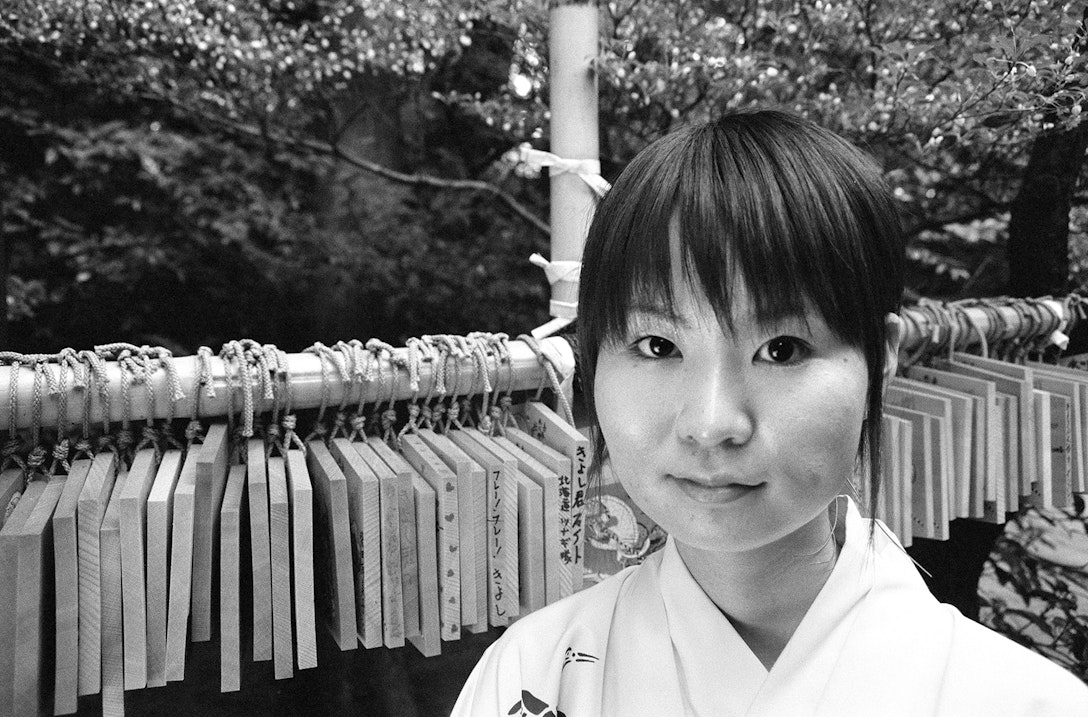
Josen Ji
Tokyo, Japan
PART-TIME JOB AS A SHINTO SHRINE MAIDEN
I work as a shrine maiden here at Hikawa Shrine. Shrines were not places I was familiar with. But as I familiarized with the environment of the shrine, it became close to my heart. Well, I don’t know everything about how Shinto ritual really works. I learned a lot from others. I hope to master the art of a shrine maiden. I wish people around the world would see the beauty of Shinto.
I am very grateful for my teacher from elementary school who brought out the best in me. I was a bad communicator, unable to speak to anyone. My teacher understood me well. I learned how to communicate with people. I am very grateful to him and he is one of the people I owe a great deal to.
I live my life making the most of each day. I have so much to learn. I create my strength from what I learn from, what I’ve picked up from learning, if possible. I value making others happy when I can share some of my learning. When I can offer my help, I try to do so. That’s my philosophy.
Daniel’s Reflection
I was grateful to meet Josen Ji, a Shinto shrine maiden in Tokyo. At first, I assumed that a shrine maiden would be a full-time clergy position but it is often held as a part-time job held by young, unmarried women who assist the Shinto priests with ceremonies, sacred dances, or even selling amulets at the shrines. Josen Ji shared with me that during the week her main job was working in an insurance company! And despite this being a part-time job, Josen Ji shared with me that it has become “close to her heart.”
Shinto is Japan’s indigenous spiritual tradition and is roughly translated as “way of the Gods.” It is not a religion in the traditional sense in that it does not have any holy book or prophets but is rather a collection of practices and philosophies. The practice of Shinto occurs mainly in temples and is integrated into the daily life of Japan, particularly life events associated with purity like births, marriages, or even New Year’s Day. Shinto is based on honoring Kami or sacred presences such as mountains, rivers, ancestors, or even community life. The emperor of Japan is considered to be in the direct lineage of the “Kami. “ During World War II, this was stretched to suggest the deification of an emperor; however it was rescinded after the war. Remarkably, both Shinto and Buddhism co-exist in Japanese life and they play different roles (deaths and burials are handled by Buddhist monks, for example, as these are considered impure).
This interview with Josen Ji reminded me how Shinto and Buddhism are so seamlessly integrated into Japanese daily life. Thank you, Josen Ji ,for sharing with me a world view shaped in part by Shinto. Her gratitude and her desire to be of service to others are qualities I too desire to embody.


Explore the portraits by theme
- happiness
- grief
- addiction
- sexuality
- sobriety
- transgender
- alcoholism
- suicide
- homelessness
- death
- aggression
- cancer
- health
- discipline
- abortion
- homosexuality
- recovery
- connection
- enlightenment
- indigenous
- depression
- meditation
- therapy
- anger
- forgiveness
- interfaith
- worship
- salvation
- healing
- luminaries
- shame