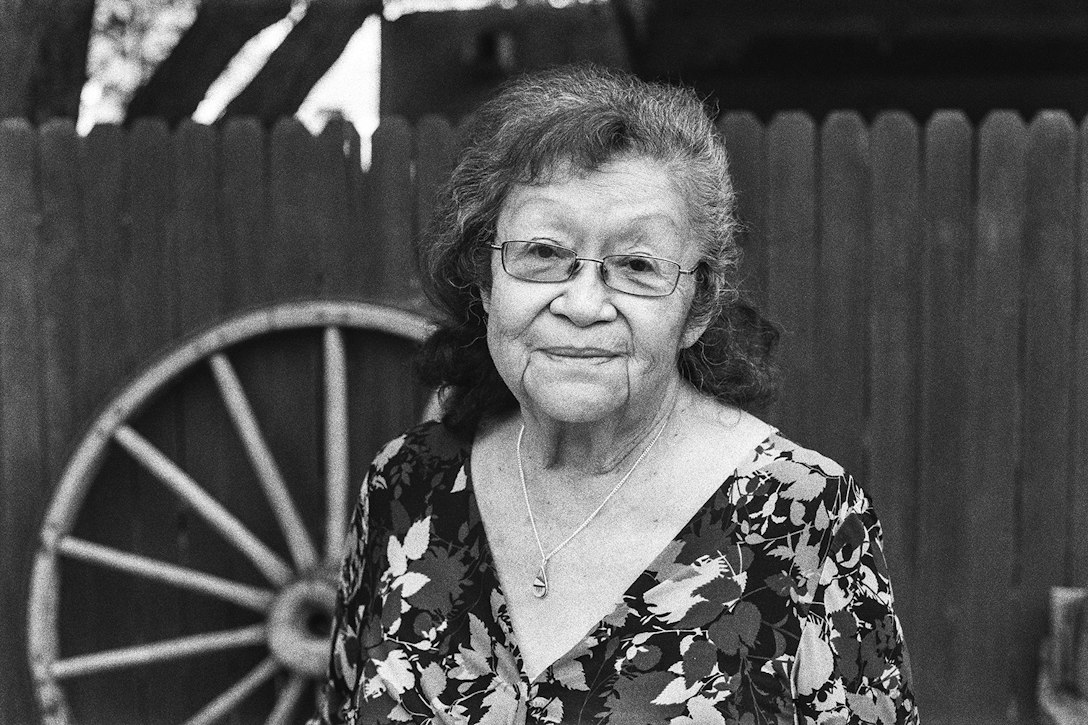
Lena P. Tsethlikia
Zuni Pueblo, New Mexico, USA
MORMON AND NATIVE AMERICAN
When my father had the Mormon elders come in and preach to him, he knew right away that he had to change his religion. There were a lot of things that he was asking. I believe he read The Book of Mormon and then he decided that this was the church that he wanted to go to. So, the missionaries would come and talk to us about different things in the Bible.
At the time, I was maybe around 10 years old. I didn’t understand what this really was until after I got baptized. That’s when I went to Ogden to go to school. The couple that I was living with taught me a lot.
When I came back, there were a few families that belonged to the church, and we would have Sunday service at some man’s house. It was on the east side of the village. When that couple said they were going to move somewhere, my father decided to have the church service in our house. And so, Sunday mornings we would get up real early, clean the house, and put the chairs up. Then people would come to church.
I don’t know how long we had church there, but my uncle, my father’s brother, had a bigger house, so we moved there. And that’s when I started to be the chorister. I still am. I think they forgot about relieving me. I like the songs, and I memorized most of them. “Sweet Hour of Prayer” is the one that I really like. There’s another song that my mother liked; it was her favorite song. And every time when we sing, "I Need Thee Every Hour,” I start crying, ‘cause it just makes me think about the way she used to smile when she was singing that song.
Daniel’s Reflection
I was fortunate to interview Lena Tsethlikia, a Zuni tribe member and a Mormon. Since this interview was conducted Lena passed away, so I have many unanswered questions for her that I will share here. How are we to understand the conversion of native peoples? Is it a pure sharing of a profound new faith, or is it a partial erasure of indigenous, native beliefs and practices? As you might expect, the answers are not clear. Lena Tsethlikia’s father felt he’d heard a great new truth when Mormon elders shared their faith with him. Lena’s parents raised her in the Mormon faith, and at some point, they sent her to Ogden, Utah to live with a white couple so that she could get better schooling. She recalled returning home to the Zuni tribe and reflected very positively on the opportunities the schooling brought her. Lena remained devoted to the Mormon religion her whole life.
I went seeking perspective from my Portraits in Faith producer in Zuni pueblo, Kenny Bowekaty, an archaeologist and tour guide. This is Kenny’s perspective: “The Mormon movement occurred in the late 1800s in what is now the Ramah community and several surrounding areas. Mormons who first came into our province were in dire straits due to lack of food and housing.
“The Ashiwi helped those people and allowed them to settle where Ramah is now. The Ashiwi were and are still farmers, hunters, and traders; they were never a war tactic tribe. That was how the Mormons got their ticket into Zuni. By the 1900s, most secondary religions—Catholic, Christians, and the Mormons—were allowed into Zuni. Some families started to recognize the change into modern day society.
“By 1921, a boarding school opened in Black Rock but there was no forced format to educate Zuni children. It was voluntary; it was used only by those families that felt their children needed some education. It wasn't a need for the rest of the Zuni community.
“This turns the table to some folks like Lena when the likes of our great grandparents, our grandparents, and perhaps parents started to involve themselves with the federal government, the military, and even college to make moves to give a better future for their children upon their return back home to Zuni. Only a small percentage of families made those types of decisions up to these days when the Mormon following is just about five percent.
“Lena grew up in what was a modern day society faction here in Zuni. For me to grow up in a small farming village 15 miles away from Zuni was like living in a different world.”
It was helpful to have this perspective from Kenny and to see Lena’s family’s conversion to the Church of Latter Day Saints as an uplifting and positive event in their life. Certainly everything in Lena’s interview showed me she was faithful and devoted. She spoke positively about the couple in Ogden who fostered her while she was in school. And by every indication, she was a proud member of both the LDS community and the Zuni pueblo.
I am grateful this project has allowed me to meet people on so many varied journeys.


Explore the portraits by theme
- happiness
- grief
- addiction
- sexuality
- sobriety
- transgender
- alcoholism
- suicide
- homelessness
- death
- aggression
- cancer
- health
- discipline
- abortion
- homosexuality
- recovery
- connection
- enlightenment
- indigenous
- depression
- meditation
- therapy
- anger
- forgiveness
- interfaith
- worship
- salvation
- healing
- luminaries
- shame