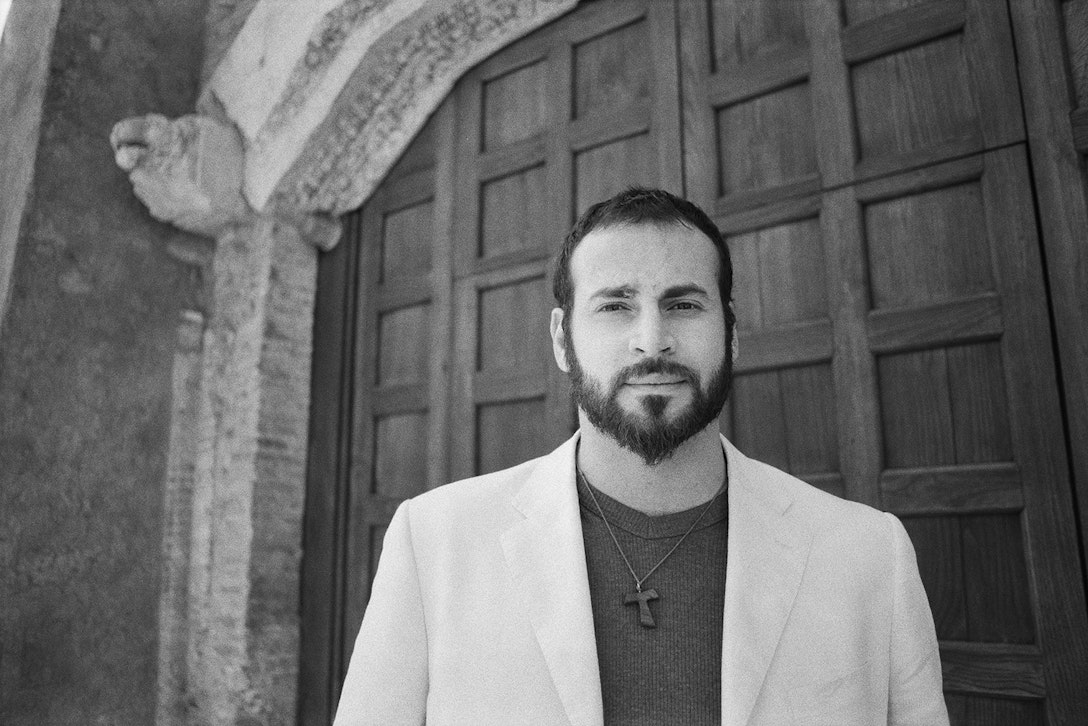
Mirko Testa
Rome, Italy
Twelve Years of Darkness
I had a period of darkness. I just quit for a while. This means something like more than 12 years of not practicing religion at all; not praying, just thinking of God and searching for God in different ways. I would say that was the most formative period of my life because I really tried to find my own way to approach God, like everyone tries to do even in different environments, even giving God different names. But I was really trying to destroy my own fragile foundations of faith. I just realized that what I was hearing from other people about religion was not what I wanted to think; I wanted to discover it by myself. So at a certain stage of my life, I just tried to discover God somewhere else; and not in the Bible or in the teachings from the Catholic Church.
The average Italian guy hasn’t got any idea what it means to be Catholic. Being a Catholic was just something that came from my belly, from my stomach. I tried to destroy this fragile foundation, that trembling foundation of faith. I felt a kind of relief because at the beginning I thought of the Catholics as just “no” to this, “no” to that, “no” to these other things, and I tried to discover a “yes” of this, a “yes” of...whatever, especially because every single teenager starts with doubts about sexual morality.
I almost wanted to avoid that voice because it meant responsibility. If you have a strong consciousness about what your mission is in life—whatever you are, a photographer, reporter, whatever, you can be anything—but if you try to avoid that voice you’ve got inside, it means that you just want to escape your responsibility. My responsibility was to testify, but it started in a different way. It started through doubts. And it was like God was playing nascondino [hide-and-seek] with me. He was trying be a bit tricky with me: “OK, show me what you can do. This is your training period. I give you 12 years or more.”
I wasn't practicing. I used to enjoy life in different ways, look at life in different ways. Oh, I've always been very spiritual. What I've been told by my parents still remains even through the darkness. I was just really upset with the Catholic Church because I couldn’t understand the teachings. And I thought I was chucking my freedom, my free will.
And I could say that I was happy in some ways, but I was selfish at the same time. Now it’s amazing how I can feel the sufferings [of others]. It’s amazing how I can feel the duty to not just to turn my head when I see someone begging for money or even if I think, “Oh, it’s a bit annoying every day.” But you cannot avoid that.
And when you try to search in your own way to God, it sometimes means you just avoid it. And you become a little bit selfish. I was melancholic. I couldn’t enjoy life as I enjoy it now, even [enjoying it] in bad times. And I didn’t look at the sky. Twelve years is a long way.
And then one day, I said, “OK, I will go to confession.” Of course, it took me one hour to explain everything that happened. And then I decided to just say, “OK, I’ll start again from the communion. Holy communion; embracing Jesus Christ. Even through all the doubts—of course you can still have some doubts, like in terms of theologically—I said, “OK, I’m here,” and then I revealed more or less all the scenes I could remember. “OK, I’m taking this step. I’m showing you that after you have hidden, I searched for you. Now I’m trying to join you again, so help me in doing this. Give me enough consciousness to do that properly.”
There is this thing that I really love in the ordination of a priest. It is when they invoke the Holy Spirit just before the bishop raises his own hands on them. They embrace the land, embrace the pavement. They are open to the Holy Spirit, waiting for Him to come. More or less, it’s something that every single person in his own religion should do. To say, “OK, I’m here. I embrace your will. Do with me whatever you want.”
Daniel’s Reflection
Mirko Testa is a journalist in Rome. He shared that he had a 12-year period of “darkness” where he tried to explore spirituality and faith outside of his native Catholic upbringing. He found his earlier understanding of Catholicism to be filled with negativity. His breakthrough came through a series of interactions that he described as: "God stepped in my life and saved me from what I was doing wrong.”
As a Catholic, Mirko started his return to the Church by going to confession after which he said he felt sweaty from a lengthy, soul-searching sharing of those 12 years of darkness. And then he took communion. I loved when he described that experience as the process of creating his own “sacred garden.” Ultimately, his return to Catholicism meant turning his will over to God’s will.
I remember a most beautiful statement Mirko made in his interview: “We won’t be judged by God on which club we joined. I wish for everyone, whether you're Jewish or you’re Protestant, or you’re Orthodox, that they really believe what they believe. And try to have a dialogue with people in other religions—not to be enclustered or captured into their own wills and their own beliefs. It is something that saved me because I opened myself to other truths.”
What he said is so much a part of my belief and objective with this Portraits in Faith project…to see each other and say, “Here is a fellow human being trying to connect with God as they understand God to be.” It gives me great hope to know that someone like Mirko is involved with the Catholic media and to know that his own journey reflects such great humility and desire to serve.
Even though I am not Catholic, I can relate to Mirko’s story and now find even more beautiful meaning in certain Catholic rituals such as a reunification with the Divine, the turning of one’s will over to the care of God, and the decision to rejoin or join a community. Thank you to Mirko Testa for using his gifts so beautifully as a journalist and as a personal example that there is always a road to return to a connection with the God of one’s own understanding.


Explore the portraits by theme
- happiness
- grief
- addiction
- sexuality
- sobriety
- transgender
- alcoholism
- suicide
- homelessness
- death
- aggression
- cancer
- health
- discipline
- abortion
- homosexuality
- recovery
- connection
- enlightenment
- indigenous
- depression
- meditation
- therapy
- anger
- forgiveness
- interfaith
- worship
- salvation
- healing
- luminaries
- shame