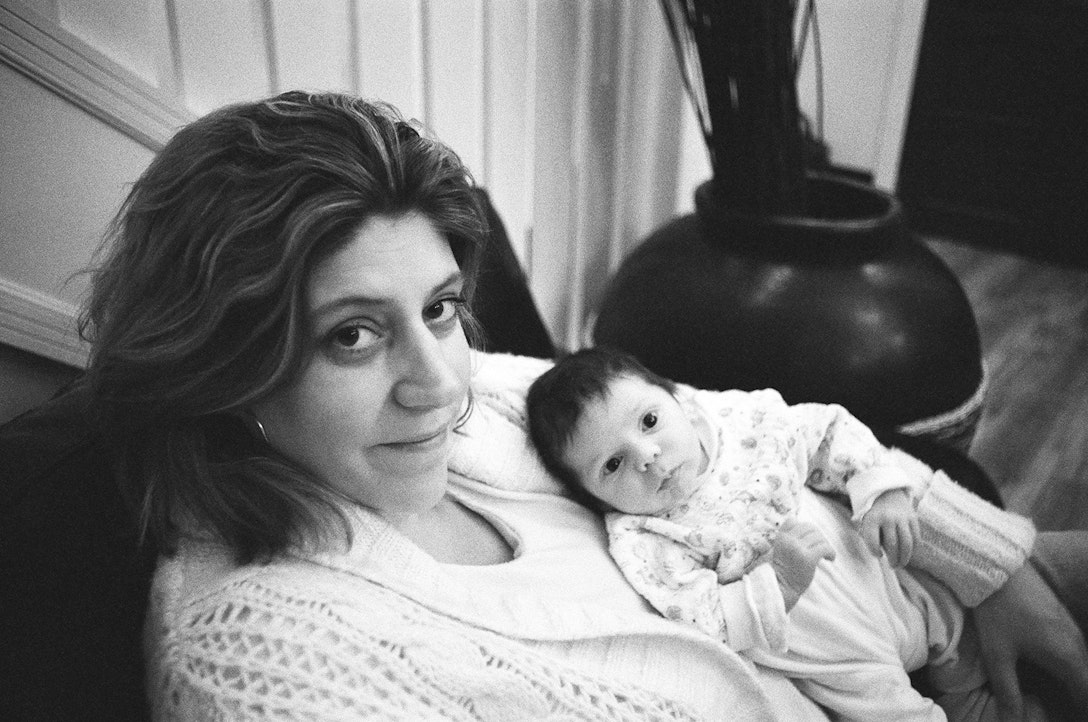
Tabetha Rosenberg
Shanghai, China
JEWS AND ATHEISTS
And then Jordan segued into, “Well, what do you think about converting to Judaism? You don’t have to; I’m just bringing it up.”
And, you know, I thought about it. “I don’t know,” I said. “I don’t know.”
And we were involved with the Shanghai Chabad community because that was all there was at the time. I was a little bit more influenced and was thinking, “Sure, why not? This is a great community, it’s all inclusive, everything is wonderful.”
I did a year-long study with a rabbi in Hong Kong. And I didn’t go very often to Hong Kong. Sometimes we’d just do it on the phone with the group, and that was really interesting. I learned, wow, a year’s a long time to study, right? Anything.
I really liked what I was learning. He was never forceful in that, ‘if you feel you’re an atheist, be one. You’re learning the history of the Jewish people. You’re learning their places in the world. You don’t have to prescribe to God.’
But he was controversial in saying that, right? “Oh, you don't want to believe in God. That's OK, but just continue on with your study.” So, he couched it differently.
But in any event, I had said I never believed in God. I’m an atheist. It just doesn’t speak to me. I think that there is some sort of energy, there’s some sort of thing, and the way we put our faith in whatever we find it to be at the time might change a lot over a lifetime.
Daniel’s Reflection
I met Tabetha Rosenberg in Shanghai, China when her newborn, Jacob Boaz, was only one week old. Tabetha was a friend of a friend of a friend; she welcomed me for Shabbat and took me to the local Chabad house for services. She was so gracious to be interested in Portraits in Faith, even with a newborn on her hands along with three other kids in a busy expat household. In fact, I recall that she had three nannies: one for the newborn, one for her twins and older son, and one to cook food for the other nannies to eat.
In her defense, Tabetha shared this with me about her three nannies: “That nanny stuff makes me sound spoiled! I really was grateful for the help, but I was also employing the cousins of the first nanny ‘cause they needed the money. More importantly, I loved, loved, loved having more women—incredible women with incredible stories about growing up during the Revolution—in the house and learning from them on so many levels. So, I guess I really was spoiled with wonderful women and companionship and just a beautiful environment with these women.”
Tabetha had gone to China as a young woman to teach English and married an aspiring Chinese filmmaker. That marriage did not work out. She stayed in China and ended up befriending a Jewish lawyer in Shanghai that she met at a concert. They married, and Tabetha had just completed her conversion to Judaism studying with a Conservative rabbi in Hong Kong. While I interviewed Tabetha on audio tape at that time, it was more than 20 years later when I interviewed her on video in her home now in Toronto. Her son, Jacob Boaz, was 22!
I find it fascinating that, like many modern Jews, Tabetha identifies as both a Jew and an atheist. And this is even after she put in considerable time to convert. So, what is up with that? My understanding is that it is driven by many factors, including:
Jewish peoplehood and culture are not just a religion because Judaism is celebrated as a close-knit culture. Peoplehood, then belief in religious tenets, is not necessary to belong.
Belief is not necessary for ‘salvation.’ In fact, there is no concept of salvation in Judaism. The closest we get is an amorphous “earning a place in the Olam Haba—the “world to come” when the Messiah arrives. Judaism is deliberately vague on the afterlife, so the focus is on the present life.
The focus is on doing mitzvot, or God’s commandments, such as keeping kosher or observing the Sabbath, not belief or faith in a Higher Power.
Many Jews were drawn in by 19th century rational thought and socialist movements that created a culture of intellectualism, separate from a culture of belief. This was only enhanced by the fact that a person could not be a practicing Jew and be illiterate. Jews, by definition, were a highly literate culture long before that was common.
As Jews, we are encouraged to doubt and argue with God, even about Its very existence. The word ‘Israel’ means “to wrestle with God,” which was the name given to Jacob after he wrestled with an angel. Even the story of Abraham arguing with God to save the people of Sodom and Gomorrah because there might have been “50 righteous men” in those cities teaches Jews to be willing to argue with God.
So, as surprising as it is, many Jews identify as both Jewish and atheist. One of my favorite social media memes goes like this:
ANSWER: “Yes, 1000 percent!”
QUESTION: “Jews, are you angry with the God you don’t believe in?”
And, of course, that is an example of self-deprecating Jewish humor…but that is a different topic!


Explore the portraits by theme
- happiness
- grief
- addiction
- sexuality
- sobriety
- transgender
- alcoholism
- suicide
- homelessness
- death
- aggression
- cancer
- health
- discipline
- abortion
- homosexuality
- recovery
- connection
- enlightenment
- indigenous
- depression
- meditation
- therapy
- anger
- forgiveness
- interfaith
- worship
- salvation
- healing
- luminaries
- shame